Community Forum – How do you use customer needs and “market pull” to guide your innovation portfolio?
- Resource Type
- Survey (Community Forum)
- Publish Date
- 05/22/2026
- Author
- Innovation Research Interchange
- Topics
- Supplier market position, Innovation, Portfolio Management
- Associated Event
- Publication
A: How do you use customer needs and “market pull” to guide your innovation portfolio?
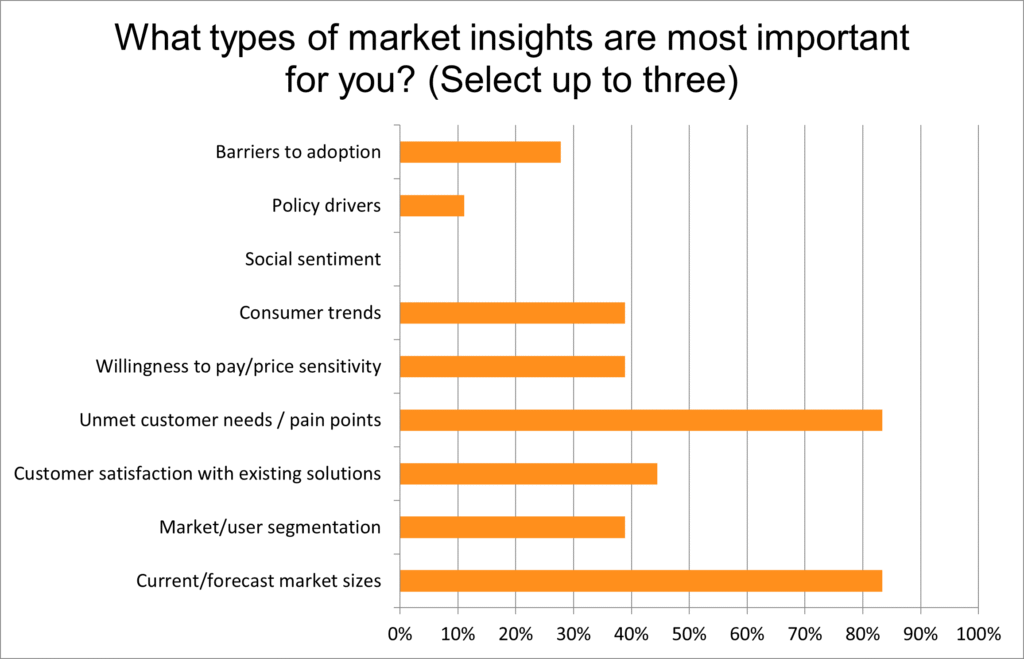
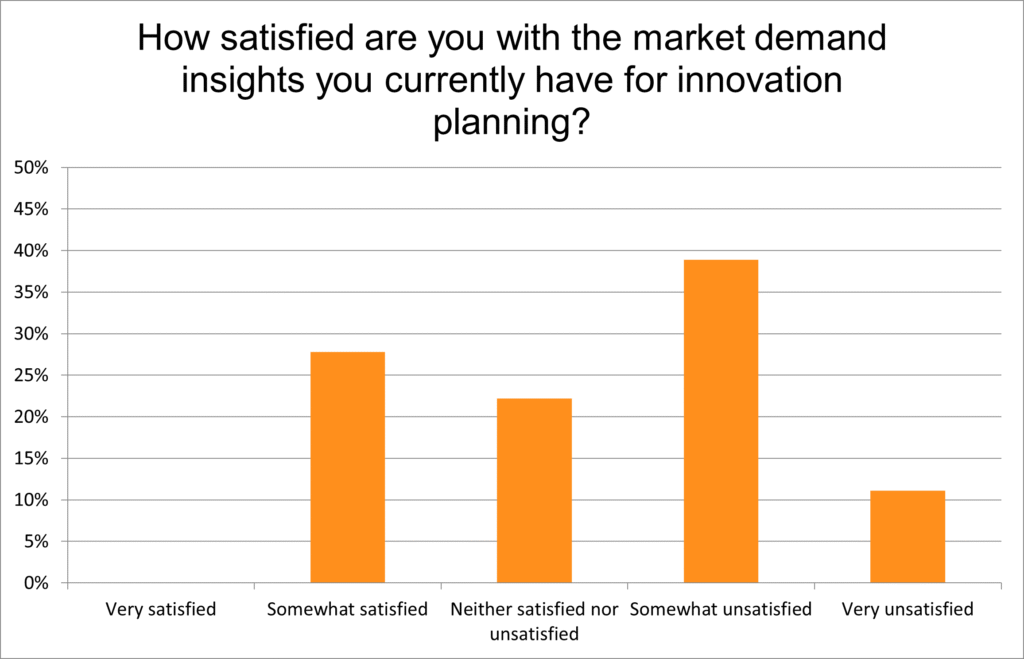
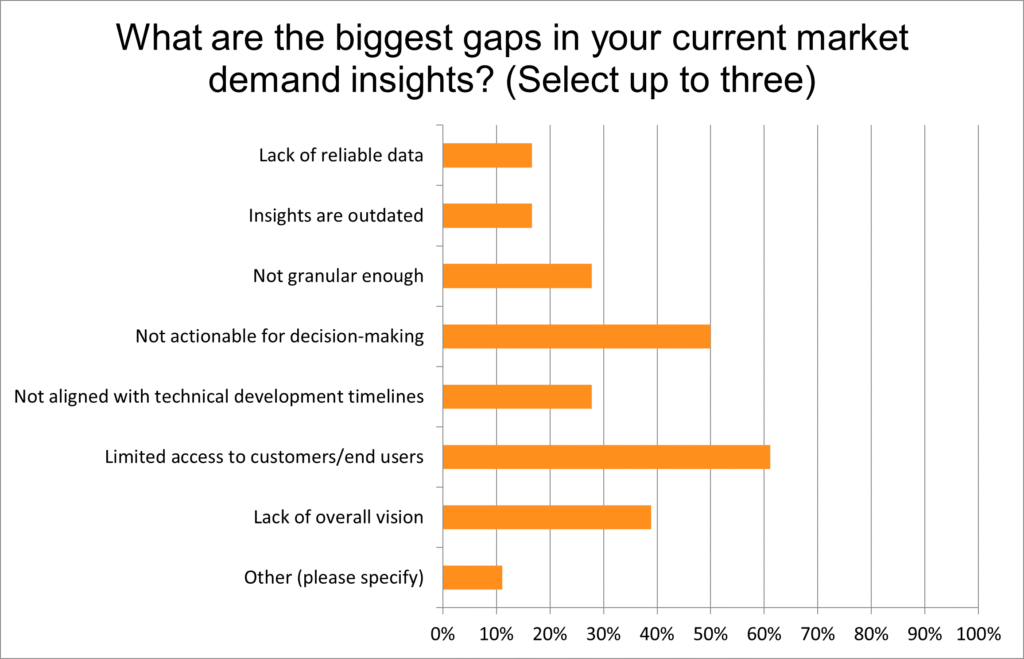
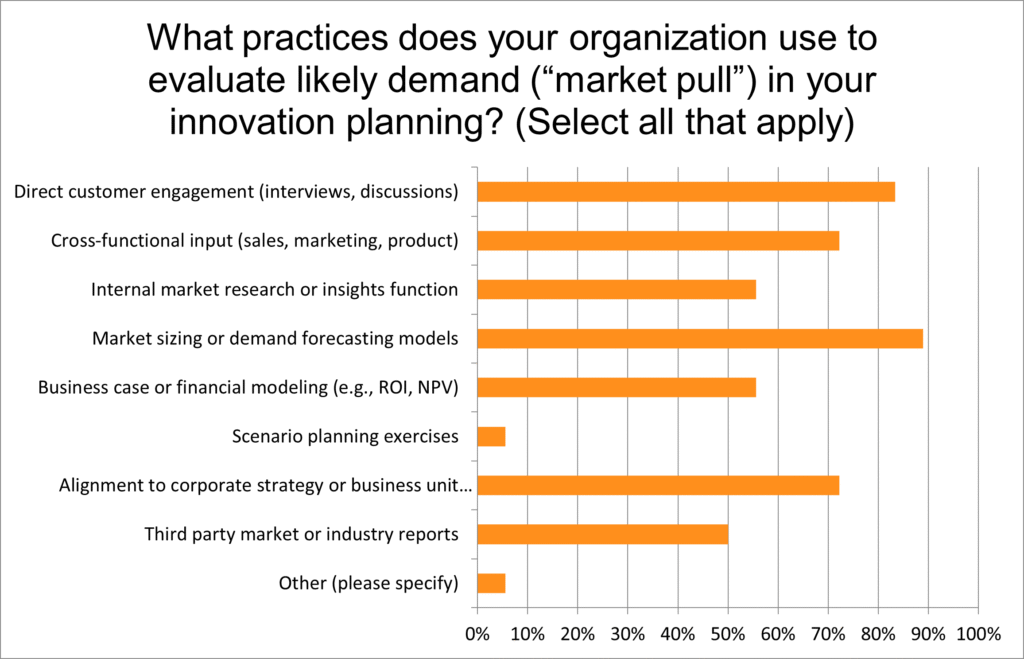
Please find below the responses to this week’s IRI Community Forum Survey. Thank you to those who took the time to add their input!
From an IRI member: We are looking to better understand how you are leveraging customer needs and “market pull” to optimize your innovation portfolio and ensure market alignment. We would like to learn more about the tools that you use for customer discovery and market insight. As usual, we will send out the results on Friday, but we will also discuss them on our Innovating Value Roundtable on June 10. Please feel free to join us.
Responses are below.
Community Responses
Other:
- Only have syndicated data
- Lacks foresight into probable scenarios

Other:
- Market sizes and new product launches
- IP trends of customers and competitors
Other:
- New product launches and direct market observation

Other:
- With market size we calculate the potential opportunity
Do you have any additional comments about which tools you’ve found to be particularly effective (or ineffective)?
- Concept dialogues directly with clients/users on problems, existing solutions, gaps, and potential solutions. These are effective, however they are also time consuming. They are best when done with a technical plus marketing two person tag team.
- Future-Back planning.
- From a vendor perspective AlphaSense has been quite useful.
- Pharmacircle helps somewhat.
- We like to leverage AIM Institute’s New Product Blueprinting to help drive conversations with customers but that requires getting it scheduled – we don’t have enough technical – technical relationships with customers since many of our products, even surprisingly technical ones are gate keeped by procurement. When we get past them we tend to do very well.
- Getting several prototypes into the hands of the end user yields valuable feedback on both the attributes the company chose to address as well as aspects that the company did not even consider. Criteria for a good product result from early user/prototype interaction. Evaluation of product’s delivery against those criteria results from user/prototype interaction later in the development process.